.jpeg)
Why does an assistance dog sometimes not wear a vest?
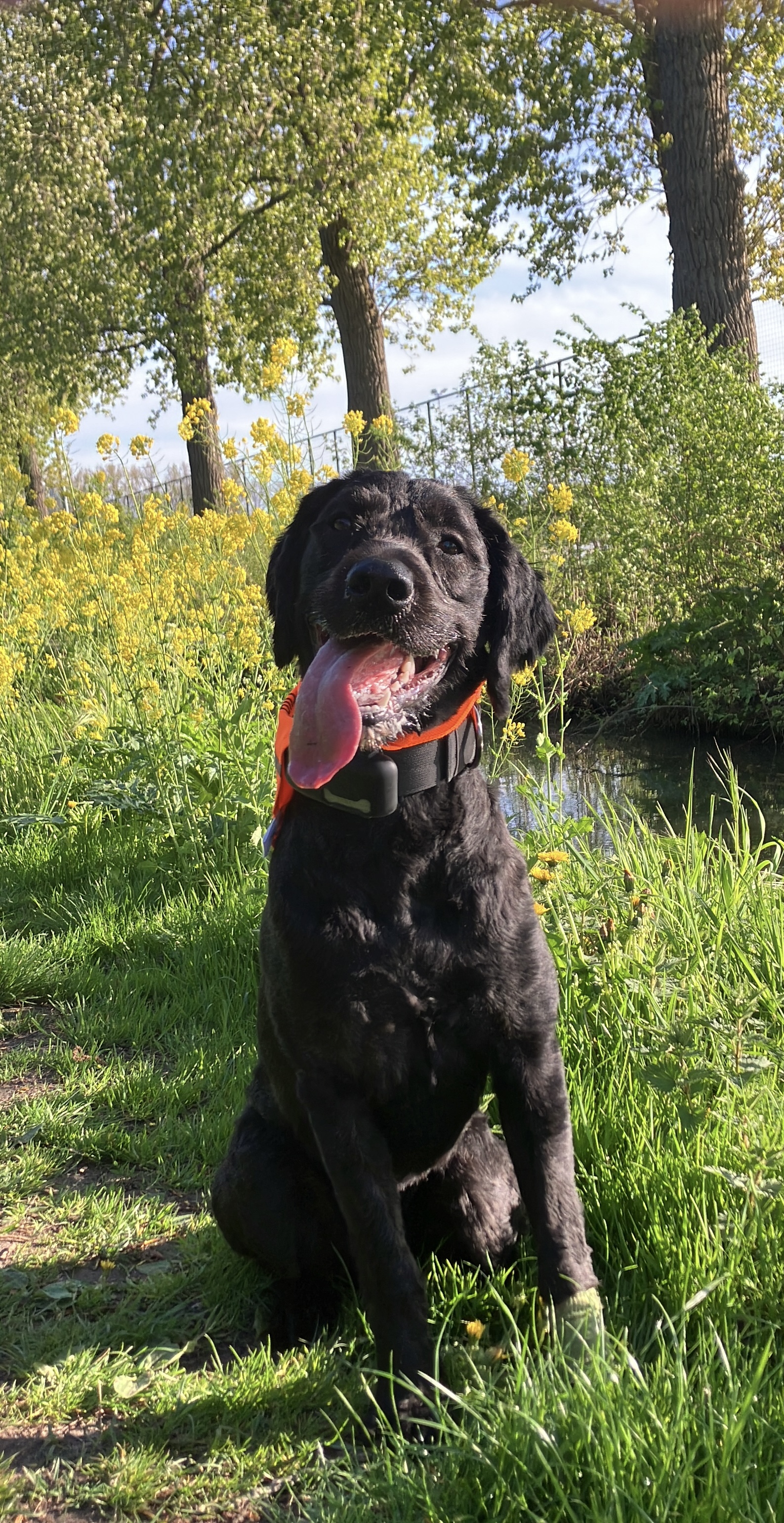
Many people think that an assistance dog must always wear a distinctive work vest or cover. If you see a dog without recognizable equipment, people are quick to assume that it is not a “real” assistance dog or that the dog is not working.
But that is a common misconception.
In the Netherlands, there is no legal obligation requiring an assistance dog to wear a cover, harness, or other form of identification. Nor is there an officially prescribed work vest or certification mark by which an assistance dog must be recognizable. An assistance dog remains an assistance dog, regardless of what it is wearing at that moment.
Of course, that does not mean that recognition has no benefits. On the contrary. A clear cover, harness, or bandana can ensure that people understand more quickly that the dog is working. This often prevents distractions, unwanted contact, and unnecessary questions.
Clear identification can also be beneficial for shops, restaurants, hospitals, and other public locations. Employees and other visitors alike immediately recognize that it is an assistance dog. This often prevents misunderstandings and makes the dog's presence clearer to everyone.
In addition, it reduces the likelihood that people think any dog is simply allowed inside. After all, a recognizable assistance dog makes it clear that this is an exception and not general permission for dogs.
However, there are also situations in which a user chooses to let the dog work or go out without a harness. There can be various reasons for this.
Warm weather, where an extra blanket is less comfortable.
A medical or practical reason why a particular harness or saddle pad is uncomfortable or undesirable.
A dog that moves more comfortably or freely without extra equipment.
A quiet or familiar environment where extensive recognition is less necessary.
Another form of identification, such as a bandana, collar, or leash.
In addition, the user also plays a role. Not everyone likes to constantly stand out. A distinctive work vest often makes it immediately visible that someone has an assistance dog with them. This can lead to curious glances, questions, or conversations that someone has absolutely no need for at that moment.
My own choice changed over the years.
My own choice has also changed over the years.
In the past, I almost always chose to have my assistance dog work wearing a distinctive cover or work vest. Nowadays, I increasingly consciously opt for subtle identification, such as a collar with a small marking. This is primarily intended for emergency responders in the event of an incident, but it is barely noticeable to most people.
That has nothing to do with the dedication or quality of my assistance dog. On the contrary. It is a choice that gives me more peace of mind personally.
I notice that people approach me less often, are less quick to judge, and express fewer expectations about how they think my dog should behave. Especially when an assistance dog is still in training, those expectations can be high. Sometimes it seems as if every step is watched and judged, whereas an assistance dog is simply a dog that continues to learn and develop.
That doesn't mean I never use recognition. On the contrary, I look at what is most appropriate for each situation.
During the last warm spell, for example, I had to go to the hospital. Because it was very hot, I chose to have my dog wear only a bandana. The work vest, however, simply went along in my bag.
Not because it was mandatory, but because I knew there might be questions at the entrance. And honestly, I didn't feel like having a discussion at that moment. If anyone asked about it, I could always put the cover on after all, and we would both be on our way.
To me, that shows exactly what this blog is about. There is no one right way. Sometimes I choose a work vest, sometimes a bandana, and sometimes a subtle collar. Not out of principle, but because every situation is different.
Ultimately, it's about behavior
However, there is one point that is often overlooked: access is not determined by a cover.
A work vest, harness, or bandana is not an entry ticket. Ultimately, it is about the behavior of the assistance dog and the cooperation between the dog and the user. An assistance dog is expected to be calm, composed, and under the control of its user.
This also means that an assistance dog is not above the rules. Just like any other dog, it must behave appropriately in the environment it visits. If a dog no longer behaves as expected of an assistance dog, a business owner may take appropriate action. Ultimately, the behavior of the dog and the partnership remain the guiding principle.
That is precisely why a vest in itself actually says very little. It does not make a dog better trained, nor does it make it more or less suitable as an assistance dog. It is a tool that can be pleasant and practical in many situations, but it is not proof of quality.
No right or wrong
A cover, harness, or bandana can help those around the dog understand more quickly that a dog is working. This often leads to more calm, clarity, and understanding. At the same time, there is no standard that works for every combination. One person always chooses a working vest, another a bandana or subtle marking, and yet another makes a different assessment based on the situation.
Therefore, let us not judge each other by what an assistance dog wears, but by the respect we show each other. Behind every combination lies a unique story, unique considerations, and sometimes reasons that are not visible to others.
Ultimately, every team wants the same thing: to be able to participate in daily life safely, independently, and with as few obstacles as possible. Sometimes with a distinctive work vest. Sometimes with a bandana. Sometimes with only subtle identification. And sometimes without visible identification.
Because ultimately, it is not the vest that makes an assistance dog, but the partnership between the dog and the user.

Ordinary Existence
The idea behind this blog aligns seamlessly with my song *Gewoon Bestaan* .
That song isn't about an assistance dog as a hero or a special phenomenon. It is actually about everyday life. Going grocery shopping together. An appointment at the hospital. Taking a walk. Being on the go, without constantly standing out or having to explain why your dog is there.
Sometimes with a work vest. Sometimes with a bandana. Sometimes with only subtle recognition.
Because ultimately, you don't want to be known as “that person with the assistance dog”. Just like everyone else, you want the freedom to simply live your life.
Just exist.
Disclaimer
This blog has been written to provide general information and guidance. The content is based on Dutch laws and regulations known at the time of writing, supplemented by practical experience. Every situation is different, and laws and regulations may change in the future. Therefore, no rights can be derived from the content of this blog.
Do you have questions about your own situation, or are you unsure about the application of the laws and regulations? Then contact an expert or the competent authority.


Comments