.jpeg)
Temporarily Without an Assistance Dog: About Emergency Boarding, Training, and Letting Go as an Assistance Dog Team
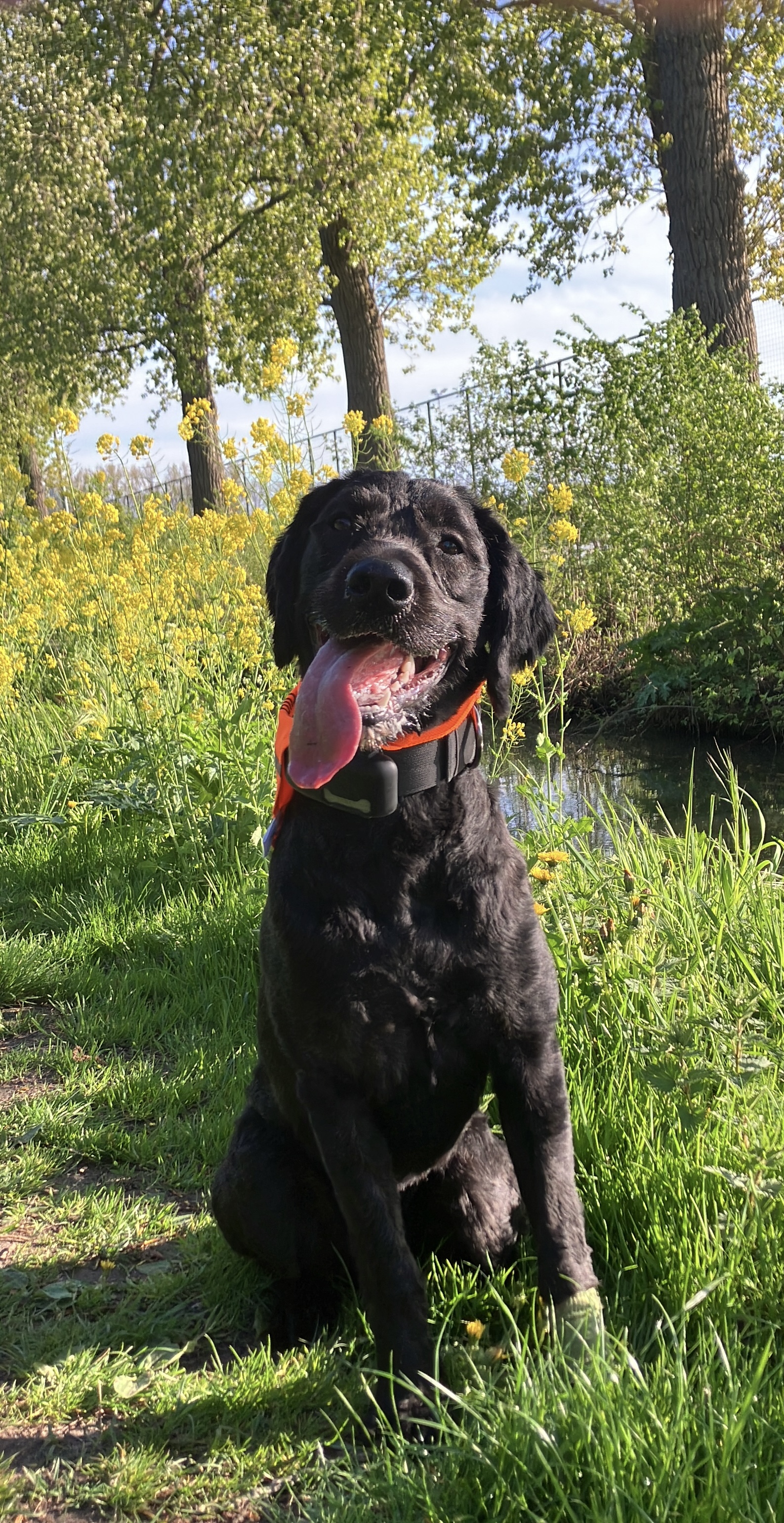
Two weeks ago, I broke my ankle.
Very suddenly, I found myself in a situation where I not only had to think about my own recovery, but also about Iris — my assistance dog in training.
And honestly, it was one of the hardest decisions I’ve had to make in recent years.
Because what do you do when your assistance dog is still in training, you suddenly become temporarily unable to care for them properly, and you have to decide what is best for both of you?
Having an emergency contact is not the same as having available emergency care
Within assistance dog programmes, people are often advised to arrange multiple emergency boarding addresses in case something happens.
That advice makes sense.
Nobody knows when a hospital admission, accident, or sudden medical setback may happen. Especially when you depend on an assistance dog, it is important to think about an emergency plan.
We had arranged those backup places too.
But reality turned out to be far more complicated.
My parents are normally one of Iris’ emergency boarding options, but they were away on holiday at the time. On top of that, my father still works full-time and my mother has a busy volunteer schedule. Short-term dog sitting might have been manageable, but guiding, training, and providing structure for a young assistance dog in training is very different from simply “having a dog in the house”.
My brother is also one of our emergency contacts, but he has a busy family life and a dog of his own. There too, it did not feel fair to place all responsibility on them for a longer period of time.
We also had a third option on a farm. A lovely place, but there currently lives a very elderly senior dog. For a short emergency stay that would have been perfectly fine, but placing a young, energetic assistance dog there for several weeks did not feel like the best choice — neither for the older dog, nor for Iris.
And that is exactly the reality people often forget:
an emergency plan on paper is very different from having a place that is actually suitable, realistic, and available at that specific moment.
An assistance dog in training cannot always simply be “put on pause”
With a fully trained assistance dog, the situation may look different. But Iris is still very much in training.
That means development, training, and guidance continue every single day.
Because of multiple bite incidents earlier in her young life, she needs additional guidance around tension and behaviour towards other dogs. It is not extreme behavioural aggression, but it does require careful and active training.
That is exactly why we wanted to avoid her training coming to a complete standstill for weeks.
Because for an assistance dog in training, “doing nothing” is rarely neutral.
Routines can disappear.Stress levels can increase.Uncertainty can grow.And behaviours you have worked hard on can regress when guidance suddenly stops completely.
That is why boarding an assistance dog in training is often not just about “dog sitting”, but also about:
structure,
training,
observation,
guidance,
rest,
and maintaining stability.
Eventually, we brought Iris back to her “puppy mum”
Meanwhile, a large part of Iris’ daily care automatically ended up with my thirteen-year-old son. He helped tremendously, but honestly: I did not think it was fair to make a child responsible for the full daily care, training, and guidance of an assistance dog in training.
That is why — after discussing things with several people involved — I eventually decided to temporarily bring Iris back to her “puppy mum”: the place where she was born.
She is currently staying at Hondendagopvang Het Twiske with Daphne Ter Beek, where she is receiving a combination of daytime care, overnight boarding, and additional training support.
Because Iris is an assistance dog in training, she receives extra guidance, structure, and focused training there.
We deliberately did not set a strict end date.
Because in the end, this is not only about my recovery, but also about Iris’ wellbeing.
How much stress is she experiencing without me?Is she able to settle and rest there?Is she making progress?And how long can I safely manage without a working assistance dog beside me?
Those are difficult decisions that assistance dog teams sometimes suddenly find themselves facing.
For the first time in more than ten years, I am without an assistance dog
What makes this situation even more significant is that, for the first time in more than ten years, I am truly without an assistance dog.
Not the transition from a retired assistance dog to a puppy.Not a dog temporarily working less.
But genuinely: no dog beside me.
And only then do you realise how deeply that support becomes woven into everyday life.
An assistance dog is not just companionship.
Over the years, a dog becomes intertwined with safety, structure, signalling, energy management, routines, and daily support. Especially when a dog performs tasks related to health, stress, or functioning, you unconsciously begin to build your daily life around that partnership.
Now that support is temporarily gone, I have to rebuild all kinds of emergency systems myself.
Having to take over everything manually
For me, that currently means:
continuously carrying out medical checks,
monitoring my readings,
setting alarms and reminders,
paying much closer attention to physical warning signs,
and constantly assessing whether situations are still safe.
The cardiac alert tasks Iris normally performs are now largely being replaced by medical devices and manual monitoring.
Where Iris would usually notice changes very early, I now have to monitor myself much more intensively to make sure everything remains stable.
On top of that, I set alarms day and night to check in with myself regularly:
Am I still fully present in the here and now?Am I dissociating?Am I staying alert enough?Can I bring myself back when needed?
That may sound small, but having to consciously monitor those things constantly takes an enormous amount of energy.
The ADL support has disappeared too.
Tasks Iris would normally help with now have to be done entirely by myself again. And it is exactly that accumulation of small things that you begin to feel everywhere.
Every action costs more energy.Every task requires more planning.And at the same time, I am still recovering from a broken ankle.
That also means making very practical choices sometimes.
Not doing everything perfectly.Postponing certain tasks.Choosing rest over perfection.And accepting that survival and safety can sometimes matter more than living exactly the way things “should” be.
The well-known “3 days – 3 weeks – 3 months” rule
Within dog boarding and behavioural support, people often refer to the well-known “3 days – 3 weeks – 3 months” rule.
While this is not a strict scientific timeline, it does align with what behaviour specialists and boarding professionals have observed for years regarding stress, adjustment, and cortisol levels in dogs.
In general:
the first days are often focused on overstimulation and observation,
the first weeks involve adapting to routines and expectations,
and true stability and relaxation usually develop much later.
But every dog is different.
Some dogs settle quickly.Others need much longer.
And especially with assistance dogs — where attachment, routines, and teamwork play such an important role — those changes can have a major impact.
At the same time, returning home does not automatically mean everything immediately goes back to normal.
That is something people often forget too.
A dog who has stayed elsewhere for weeks usually needs time to readjust at home.And a handler who has temporarily lived without an assistance dog also has to learn how to switch back again.
Sometimes good care means temporarily letting go
For now, the plan is for Iris to stay there for around three weeks — hopefully long enough for my ankle to recover further, and for Iris to come home with new experiences, additional training, and hopefully more stability.
But honestly, we do not know exactly yet.
We are taking it day by day.
Looking at my recovery.Her behaviour.Her stress levels.Safety.What remains manageable.And what continues to be responsible for both of us.
And maybe that is ultimately the biggest lesson of this entire period.
An assistance dog team is not only about independence.
Sometimes it is about recognising in time when temporary extra help is needed.
Because sometimes good care does not mean carrying everything alone at all costs.
Sometimes good care means honestly looking at what you, your dog, and your environment truly need at that moment.


Comments