.jpeg)
Raw Meat and Assistance Dogs: Hygiene, Food Safety and Responsible Assistance Dog Ownership
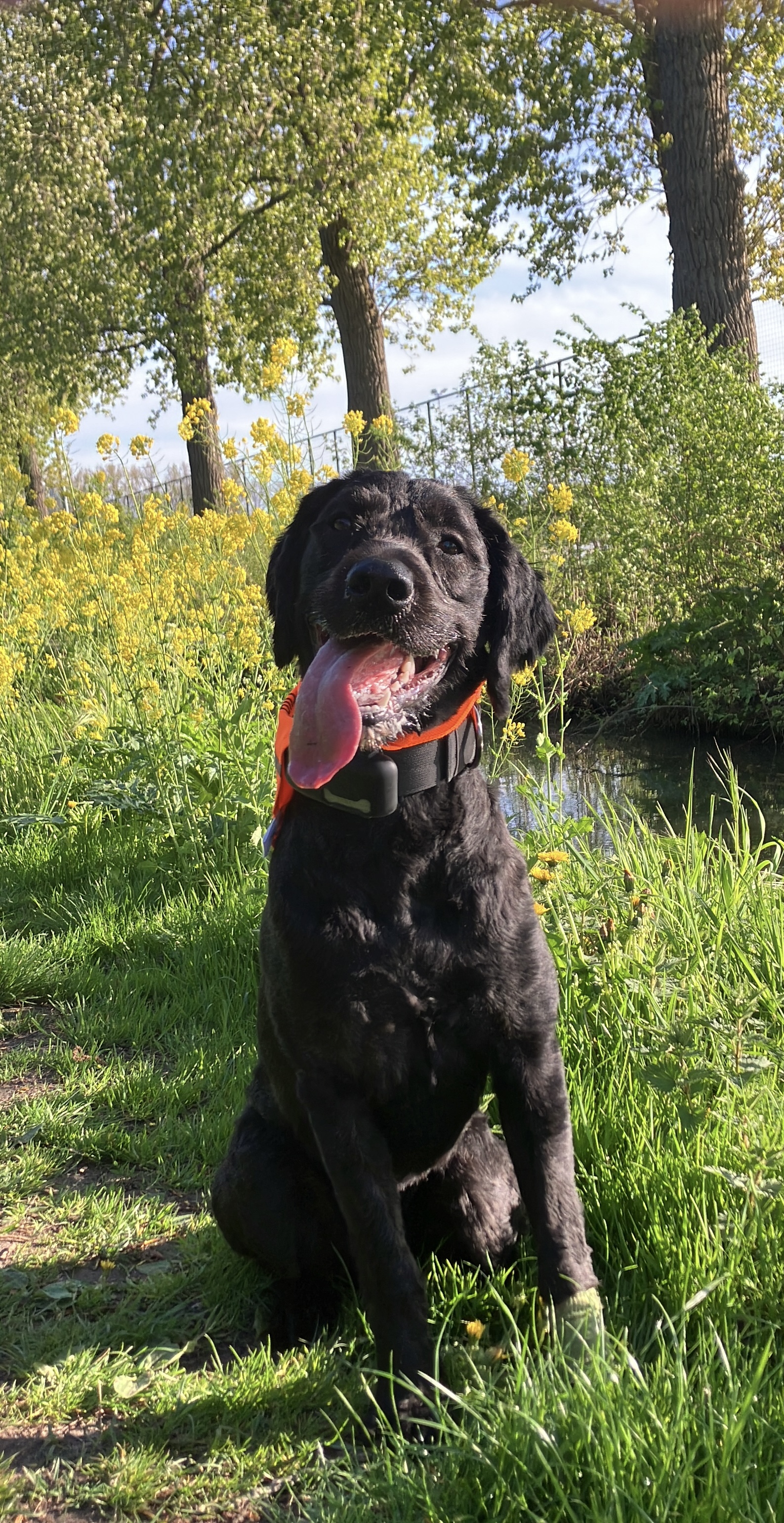
Responsible Assistance Dog Ownership: Why Nutrition, Hygiene and Social Responsibility Go Hand in Hand
Assistance dogs make it possible for people with disabilities or chronic medical conditions to function independently in everyday life. They can alert to medical changes, assist with daily tasks and provide their handler with safety and independence.
Because of their training and legal status, assistance dogs are allowed in many places where ordinary pets are not permitted. This includes shops, restaurants, public transport, healthcare facilities and sometimes even ambulances or medical treatment areas.
That level of access is essential for people who rely on their assistance dog.
However, precisely because assistance dogs accompany their handlers in so many different environments, this also brings responsibility. Not only towards the dog itself, but also towards society, business owners, healthcare professionals and other people who share those spaces.
A working assistance dog regularly enters environments where hygiene, food safety and infection prevention are important considerations. This means that assistance dog teams must continuously think about how to minimise potential risks wherever possible.
For me, that also includes making conscious choices about my dog’s diet.
Assistance Dogs Are Not Ordinary Pets
An assistance dog fulfils a medical role. This means that the dog is not only a companion animal, but also a working dog with a specific function in the daily life of their handler.
Because of this role, an assistance dog often accompanies their handler to places where other dogs would normally never go.
For example:
supermarkets
restaurants
schools
public transport
hospitals
GP practices
healthcare facilities
This requires a different way of thinking about grooming, care and hygiene.
For that reason, many assistance dog teams pay extra attention to aspects such as:
coat care and grooming
training and behaviour
regular health checks
parasite prevention
hygiene in public spaces
All of these factors play an important role in ensuring that an assistance dog can safely and responsibly function within society.
Unplanned Medical Situations Are Part of Life with an Assistance Dog
One factor that is often overlooked is that medical situations are not always planned.
For many assistance dog users, medical care may be needed unexpectedly. This can mean suddenly finding yourself at the GP, needing to visit an emergency clinic, or even requiring an ambulance.
In these situations, the assistance dog usually stays with their handler. After all, that is exactly what the dog is trained to do: provide support when it is needed most.
However, this also means that an assistance dog may sometimes end up in medical environments without prior preparation.
For example:
in an ambulance
in a GP practice
at an emergency care clinic
in a hospital
Because these situations cannot be predicted, it makes sense to make choices that minimise the risk of bacterial spread wherever possible.
For me, this includes choosing not to feed my assistance dog a raw meat diet.
Infection Prevention and Assistance Dogs
In medical environments, a great deal of attention is paid to infection prevention. International guidelines for animals in healthcare settings emphasise that the hygiene and health of animals are important when they come into contact with patients or enter medical environments.
Researchers have studied therapy dogs that visit hospitals, among other settings. Studies show that dogs can pick up bacteria from their surroundings or carry them without showing any signs of illness.
This does not only apply to dogs. Many animals — and humans as well — carry bacteria without experiencing any symptoms themselves.
What research does show, however, is that certain factors can influence the likelihood that bacteria are shed.
One of those factors is diet.
Raw Diets and Bacterial Risks
Raw meat may contain bacteria such as:
Salmonella
Campylobacter
certain strains of E. coli
Dogs can sometimes carry these bacteria without becoming ill themselves. In some cases, they may shed them through their faeces or saliva.
Studies have shown that dogs fed raw diets may shed certain pathogens more frequently than dogs fed commercially prepared cooked diets.
This does not mean that every dog fed a raw diet automatically poses a problem.
However, for dogs that work extensively in public environments, it can be a factor worth taking into consideration.
Food Safety in Restaurants and Shops
In addition to medical environments, food safety is also an important consideration.
Restaurants and food businesses operate under hygiene systems such as HACCP (Hazard Analysis and Critical Control Points). These systems are designed to prevent food poisoning and contamination of food.
When an assistance dog is present in a restaurant or shop where food is sold or prepared, the dog is in an environment where food safety is an important factor.
For a household dog that mainly stays at home, this usually plays little or no role.
However, for a dog that regularly enters restaurants, shops and other public spaces, it may be wise to pay extra attention to factors that could potentially influence hygiene.
For this reason, some assistance dog teams deliberately choose feeding practices that carry a lower microbiological risk.
Respect for Business Owners
Business owners have legal responsibilities when it comes to hygiene and food safety.
They must comply with inspections and food safety regulations and may be held liable if food becomes contaminated.
For some business owners, the presence of a dog in their establishment can feel concerning, especially if they are not very familiar with the rules surrounding assistance dogs.
When assistance dog teams demonstrate that they handle hygiene, training and the care of their dog responsibly, it helps to build trust.
That trust matters.
Because the more business owners experience assistance dogs as calm, clean and well-trained, the easier it becomes for assistance dogs to remain welcome in their establishments.
Why Assistance Dogs Sometimes Need to Be Cleaner Than Ordinary Pets
Assistance dogs are often cared for more intensively than ordinary pets.
Many assistance dog teams pay close attention to aspects such as:
coat care and grooming
nail care
bathing when necessary
parasite prevention
regular health checks
In addition, assistance dogs are trained to remain calm and predictable in busy environments.
This combination of training and care helps ensure that their presence in public spaces remains as safe and responsible as possible.
Responsible Assistance Dog Ownership
Access to society is an important right for people who rely on an assistance dog.
However, this right can only continue to exist if assistance dog teams demonstrate that they take their responsibilities seriously.
This includes, for example:
ensuring that the dog is clean and well cared for
paying close attention to training and behaviour
considering hygiene in public environments
minimising risks wherever they can reasonably be avoided
For me, this also includes choosing not to feed my assistance dog a raw meat diet.
Not because every dog fed a raw diet automatically poses a problem, but because a working assistance dog may enter situations where hygiene and infection prevention are particularly important.
A Discussion the Assistance Dog Community Needs to Be Willing to Have
Within the assistance dog community, it is often — and rightly — emphasised that assistance dogs should have access to public spaces and society.
However, perhaps we should also be willing to ask ourselves another question.
Not only:
“Is my assistance dog allowed to enter here?”
But also:
“What can we do to ensure that assistance dogs continue to be welcomed everywhere they are needed?”
Sometimes this requires honest self-reflection.
When assistance dog teams demonstrate that they are thoughtful and responsible in their approach to training, care, hygiene and feeding, it strengthens the trust that business owners, healthcare professionals and the wider public have in assistance dogs.
And that trust is essential.
Access to society is a right.
But protecting that right is also a shared responsibility.
Myths and Facts
Myth: Raw diets are always safe.
Fact: Raw food can contain bacteria that dogs may sometimes shed.
Myth: An assistance dog is simply a pet.
Fact: An assistance dog fulfils a medical role and therefore accompanies their handler to places where ordinary pets are not allowed.
Myth: Diet does not affect hygiene.
Fact: Studies show that dogs fed raw diets may shed certain bacteria more frequently.
An assistance dog is not just a companion animal, but also a working dog that moves through society every day. For that reason, it makes sense to make choices that minimise potential risks to others wherever possible.
Frequently Asked Questions (FAQ)
Is raw feeding bad for dogs?
Not necessarily. Some dog owners choose this feeding method for various reasons. However, for working assistance dogs it can be a factor worth considering because they regularly enter public environments where hygiene may play a role.
Are assistance dogs allowed in restaurants?
Yes. In many countries assistance dogs are permitted in restaurants because they fulfil a medical assistance role for their handler.
Can dogs transmit bacteria to humans?
Certain bacteria can be transmitted through animals, just as they can be transmitted through people or food. Good hygiene and proper care help reduce potential risks.
Why do assistance dog teams pay extra attention to hygiene?
Because assistance dogs accompany their handlers to many places where ordinary pets are normally not allowed.
Extended References
Finley, R., Reid-Smith, R., Ribble, C., Popa, M., Vandermeer, M., & Aramini, J. (2006).
The risk of Salmonellae shedding by dogs fed contaminated commercial raw food diets.
Canadian Veterinary Journal.
Lefebvre, S. L., Reid-Smith, R., Boerlin, P., & Weese, J. S. (2008).
Evaluation of the risks of shedding Salmonellae by therapy dogs fed raw diets.
Zoonoses and Public Health.
Freeman, L. M., Chandler, M. L., Hamper, B. A., & Weeth, L. P. (2013).
Current knowledge about raw meat-based diets for dogs and cats.
Journal of the American Veterinary Medical Association.
van Bree, F. P. J. et al. (2018).
Zoonotic bacteria and parasites found in raw meat-based diets for pets.
Veterinary Record.
Weese, J. S., & Rousseau, J. (2005).
Survival of Salmonella in raw pet food diets.
Journal of the American Veterinary Medical Association.
European Food Safety Authority (EFSA).
Zoonotic pathogens and food safety reports.
World Health Organization (WHO).
Food safety and zoonotic disease prevention guidelines.
Centers for Disease Control and Prevention (CDC).
Animals in healthcare facilities: infection control guidelines.
Lefebvre, S. L. et al. (2008).
Guidelines for animal-assisted interventions in healthcare facilities.
American Journal of Infection Control.
Dalton, K. R. et al. (2020).
Risks associated with animal-assisted intervention programs.
American Journal of Infection Control.
World Health Organization (WHO).
Five Keys to Safer Food.
Food and Agriculture Organization (FAO).
Food safety and zoonotic diseases.
Hazard Analysis and Critical Control Point (HACCP) system.
International food safety management principles.



Comments