.jpeg)

Stress Out, Calm In: Physical Relaxation for Dogs (Free Co-Regulation A4 Handout)Untitled
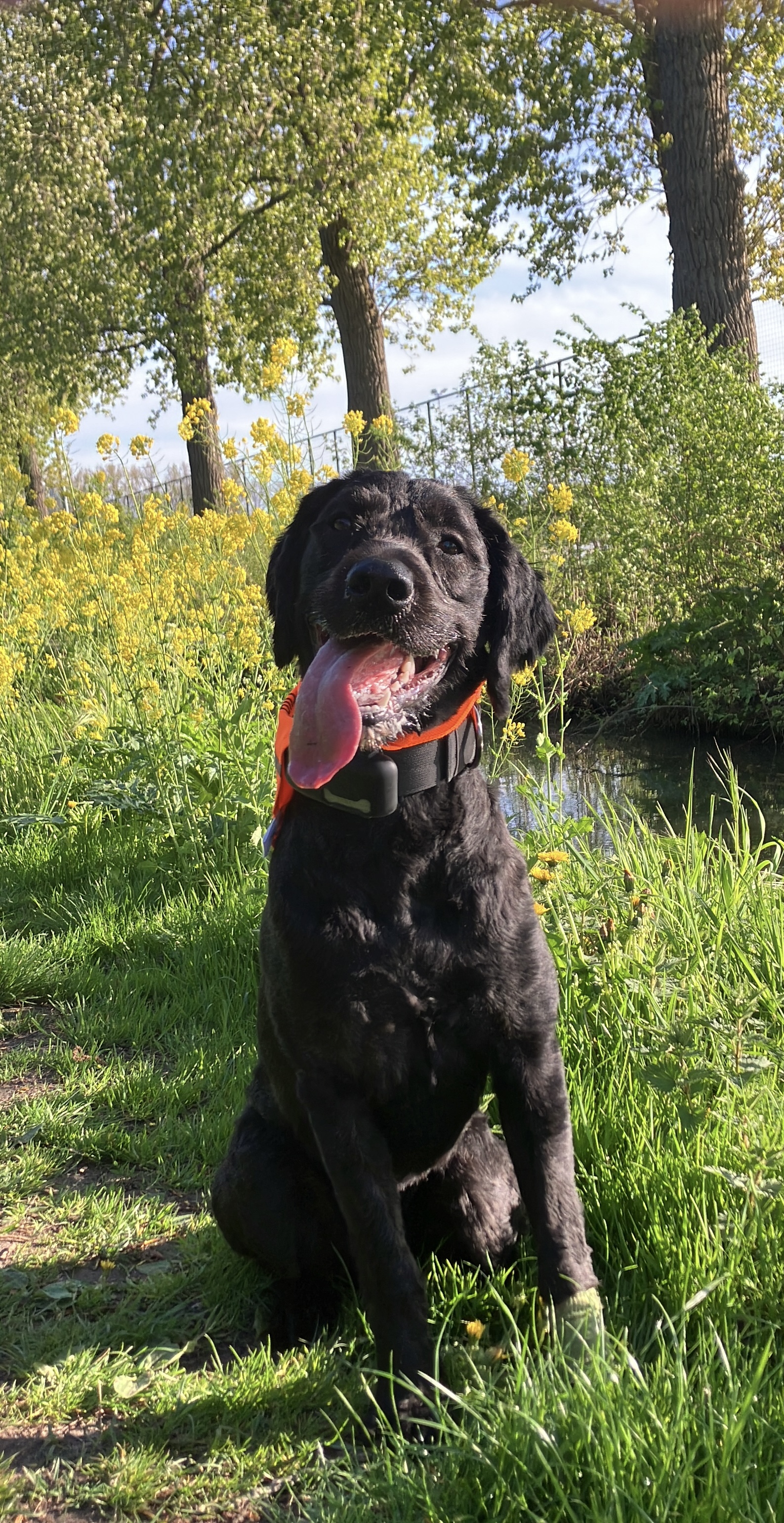
Stress Out, Calm In
Physical ways dogs release stress — and why it’s never one fixed recipe
(including a free A4 handout: “1.5 minute reset together”)
There are those lists you see everywhere: “Do this and your dog will calm down.”
Sniffing. Chewing. A lick mat. Swimming. Massage. A crate. A walk.
And yes — all of those can help.
But relaxation isn’t a universal button you press the same way for every dog. What is calming for one dog can be stressful for another. And even for the same dog, it can change from day to day, moment to moment, depending on context.
In this blog you’ll find a full overview of physical, body-based ways dogs can release stress and build relaxation — and how to choose what fits your dog, right now.
📄 Free download: at the end you’ll find a printable A4 handout: “1.5 minute reset together” (co-regulation for handler + dog).
Relaxation isn’t the activity. Relaxation is safety.
Swimming is relaxing for many people.
But if you throw me into a pool while I have a fear of water, swimming isn’t relaxing. It’s panic. That’s it. Simple.
The same goes for showering or taking a warm bath: for many people it’s soothing. But if water is a trigger for you, it doesn’t feel like relaxation — it feels like necessity.
Dogs work the same way.
A “calming method” is only calming if the dog experiences it as safe.
Swimming can be wonderful… or a trigger.
Sniffing can calm… or cause stress if your dog meets scents that push them over the edge.
Massage can help… or create tension if touch doesn’t feel safe.
A crate can be a safe cave… or a place your dog becomes restless.
The rule is simple:
Relaxation is: your dog can choose, and your dog can stop.
When something feels like “I must, and I can’t get out”, you’re moving toward stress — even if that same activity calms another dog.
It changes every day, every moment — so learn to read your dog
Even if you find something that usually works, it won’t work every time.
What calms your dog in the morning may be too much at night.
What works at home may fail outside.
What works on a “quiet day” may not work when the bucket is already full.
So the most important skill is not: “Which method is best?”
It’s: seeing what your dog needs right now.
Watch for signs such as:
tense muscles vs. a soft body
panting without physical effort
fixating / unable to stop
startling more easily
becoming more vocal
reacting faster to other dogs
trouble sleeping or recovering
💡 True relaxation often looks like softening (body + eyes) and better recovery afterwards.
Overstimulation isn’t always panic: the “bouncing-through” dog
Not every dog shuts down when overstimulated. Some dogs do the opposite: they keep going. They stay “on”, keep moving, keep scanning — and it can look like they’re still fine.
Until you see small cracks.
Iris is that kind of dog. When she crosses her threshold, she doesn’t collapse. She keeps bouncing. But you start to see behaviour that makes perfect sense for a dog — yet is not what we want in that moment:
more hunting behaviour outside
quicker reactions to other dogs
startling faster
becoming more vocal
less “working brain” and more “dog brain”
And as a handler you feel it immediately:
No, sweetheart… back to your calm self, please.
This isn’t disobedience. It’s arousal. The nervous system is high, and the self-brake is weaker. That’s exactly why early signals matter — especially for assistance dog teams.
When your dog can’t self-regulate anymore: guided recovery and “required rest”
In an ideal world, your dog chooses rest by themselves. But when the arousal level is too high, some dogs simply can’t find the off switch anymore.
That’s when you have to guide them.
Required rest does not mean being harsh. It means taking responsibility for recovery, because your dog can’t do it alone in that state.
Important: this only works if you can truly read your dog. A dog can also become still because of stress (freeze), and you don’t want to confuse that with relaxation.
“Requiring” only works inside something that is already safe
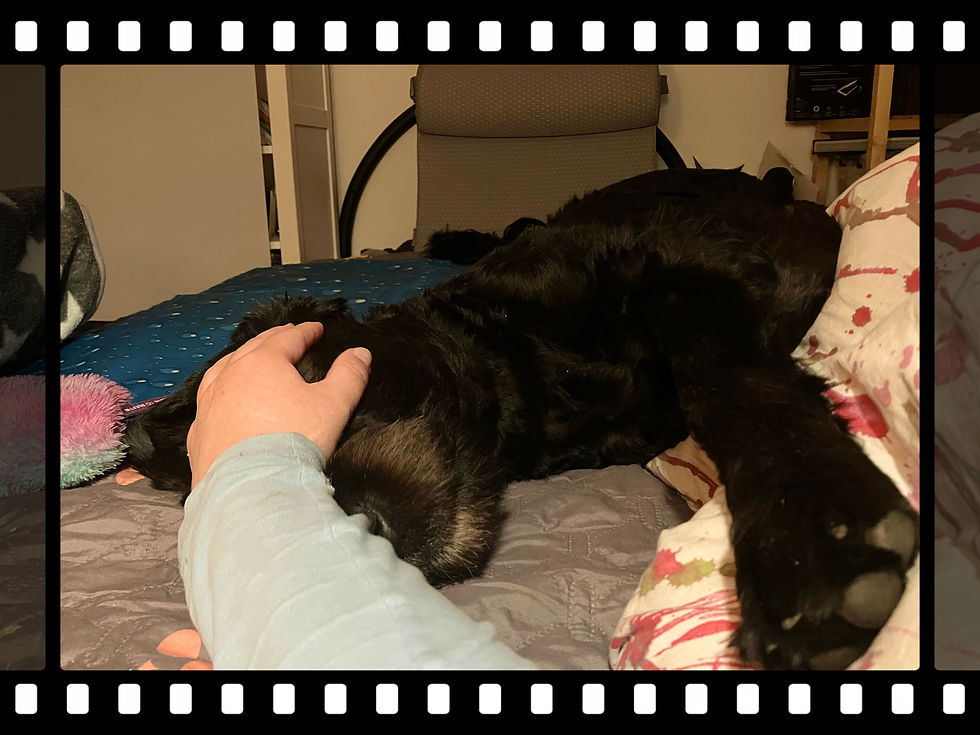
Massage can be a recovery anchor — but only if your dog already knows it and finds it pleasant. You don’t push them through a trigger. You guide them into a proven routine they can’t access on their own when overstimulated.
Same with sleep: some dogs need help to truly switch off, because otherwise they keep bouncing on adrenaline.
Physical relaxation tools: the full menu
Think of this as a menu, not a fixed recipe. You choose what fits your dog, in this moment.
1) Mouth work: chewing, licking
Rhythmic mouth activity is often regulating.
safe chew items (appropriate for teeth and digestion)
lick mats
stuffed Kong/Toppl (frozen = longer and calmer)
soft food “licking” in a bowl (dog-safe)
⚠️ Note: some dogs become frustrated or possessive with chewing. In that case, choose a different tool.
2) Nose work: sniffing and searching
Sniffing often lowers pace and tension.
“sniff walks” (less distance, more sniff time)
scattering food in grass
snuffle mats
“find it” games
simple tracking / hide-and-seek food games
⚠️ Sniffing can also trigger stress (wild scents, a female in heat nearby, stress scent from other dogs, locations linked to bad experiences).
3) Calm movement: releasing stress without winding up
Movement can discharge stress — but “high drive” play can also increase arousal.
calm walks with sniff breaks
steady trotting (if physically suitable)
swimming (only if your dog enjoys it)
balance/bodywork (proprioception)
💡 The goal isn’t “tire them out”. The goal is “bring them down”.
4) Deep pressure and boundaries (proprioception)
Many dogs relax with pressure and body boundaries.
leaning against you
settling between cushions / against the sofa
crate as a safe cave (positively built)
body wrap / calm coat (gradual conditioning)
“paws up”, slow cavaletti, backing up (low tempo)
5) Massage and touch (only if your dog is used to it)
Massage can be excellent — but only if your dog experiences touch as safe and pleasant. Start small, slow, and predictable.
💡 Tip: a canine massage therapist (kynologisch masseur) can be extremely helpful — not only for treatment, but especially to teach you basic skills: how to recognise tension, which techniques are safe for home use, how to build in steps, and how to read stop-signals.
⚠️ Massage is never “push through it”. If your dog stiffens, looks away and doesn’t return, pants, or wants to leave: stop and choose another method.
6) Temperature and comfort: warmth / cool
Comfort reduces background stress.
warm blanket / heat pad (safe use)
cooling mat / cool floor in summer
sunbathing or fresh air (depending on the dog)
Also: itching, pain, stomach issues, or a poorly fitting harness can make relaxation nearly impossible.
7) Reset behaviours: shake, stretch, sigh
The body often does small resets on its own.
shake-off
stretching
yawning and sighing (always read in context)
Allow these moments.
8) Low stimulation: the underrated tool
Sometimes the best “tool” is simply less.
fewer stimuli
fewer tasks
fewer social moments
more predictability
more real sleep
This matters even more for assistance dogs, because we ask a lot: switching, filtering, task work, and staying socially correct in public.
Co-regulation: your calm is a tool, too
Sometimes you don’t need to do more with your dog. Sometimes you need to do less — and calm yourself.
Many dogs mirror their handler’s tension. Assistance dogs in particular are highly tuned in: they read your breathing, muscle tension, pace, gaze, and micro-movements constantly. If you stay “on”, they often stay “on”. If you settle, they can settle with you.
That’s why simply sitting next to your dog can already be an intervention — if you use that moment to actively regulate.
📄 To make this easy, I created a free printable A4:
“1.5 minute reset together” — a mini routine you can use at home, on the go, or during chaotic periods (like moving house).

Real life: moving house = chaos = a lower threshold
We’re in the middle of moving house, so everything at home is different: boxes, furniture moved, more activity, different routines, I sleep worse — and Iris sleeps worse too.
You can see it:
she’s “on” faster outside
she reacts quicker to dogs, especially anxious/stressed ones
she startles more easily
she slides into her weak spot: hunting/searching outside
she’s simply a bit more “neurotic” and tense
It’s not a total disaster. But it’s clear: the system is under pressure.
So you make choices:
lower task demands
sometimes she comes along less
sometimes someone else steps in
build in low-stim recovery days
And moving day itself? She won’t be there. Period. That’s not weakness — that’s risk management and welfare.
Lower the bar: acceptance is a skill
Sometimes the best decision is accepting “less perfect”.
That means:
it’s messy once
the response isn’t as tight
your dog is more “dog” for a moment
And that’s okay. She’s not a robot.
In fact, chasing perfection during a stress phase often makes it worse. The harder you pull on “it must be right”, the more tension rises in the whole team.
Sometimes the healthiest sentence is:
“Okay. Today is maintenance. Tomorrow we grow.”
And if it’s a bit less polished once?
As long as it isn’t serious misbehaviour: blessed be.
My goal is not perfection.
My goal is safe, workable, and recoverable.
And that includes saying:
“Not today. Less today. And that’s exactly right.”
Download: 1.5 minute reset together (A4)
Print it, put it on the wall, keep it in your bag, or leave it in the car.
Use it preventively (before you go out) or as a reset after triggers.

Comments