.jpeg)
Baby and toddler toys as enrichment for dogs
- Rebekka van Vliet
- Feb 4
- 7 min read
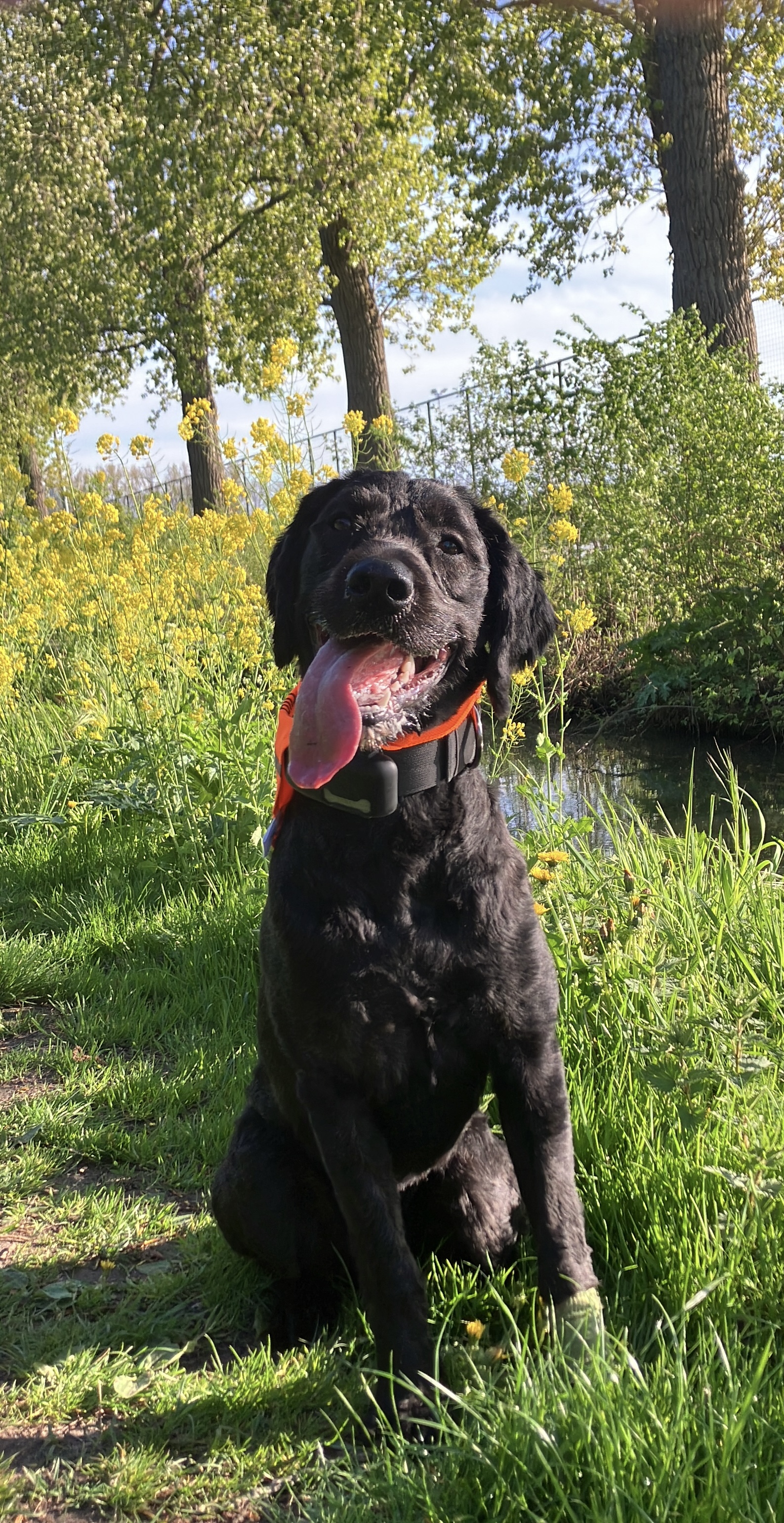
Smart, cheap and surprisingly versatile – if you use it safely
You don't have to buy expensive dog puzzles to mentally challenge your dog.
Many baby and toddler toys are perfect for brain games, nose work, and quiet collaboration – as long as you consciously choose what you use and how you use it.
In this blog you can read which materials work well, which don't, and how you can safely create a surprising number of play options with them.
Important starting point here:
This is supervised play equipment, not loose chew toys.
The most important basic rule
Choose only materials without loose or hard parts.
In very concrete terms this means:
- no plastic eyes
- no embroidered parts that can come loose
- no buttons
- no strings, ribbons or bows
- no labels that are easily chewed
- no elastic
- no squeakers or cracking material (unless used deliberately as a short exercise)
The simpler the material, the better.
What actually works well
Soft baby cuddly toys without accessories
Completely soft cuddly toys made only of fabric and stitching are very suitable as calm play and regulation material.
They can be used for:
- hold steady
- wear
- simple hide-and-seek games
- moments of de-stimulation
Make sure that there are absolutely no decorations, edges or different materials on it.
Small adjustment: a little sheep's wool
You can very carefully open a soft cuddly toy a few centimetres into an existing seam, insert a small tuft of clean, untreated sheep's wool and then sew it firmly closed.
For many dogs, such a cuddly toy becomes extra interesting because of its smell and texture, without the toy immediately becoming exciting or busy.
Conditions:
- just a little bit of wool
- always sew firmly closed
- check regularly
- only suitable for dogs that are not fanatic about destruction
- always introduce under supervision
Variation on sheep's wool: a little catnip
Instead of (or in addition to) sheep's wool, you can also use a little bit of catnip (the dried flakes normally sold for cats).
For example, you can:
- incorporate a few flakes into a cuddly toy, hand puppet or cloth.
Some dogs find the smell of catnip surprisingly interesting.
Other dogs don't respond to it at all.
Important to know:
- the effect varies greatly per dog
- always use only a very small amount
- introduce it calmly and under supervision
Think of it as an additional option to try – not as a default solution.
What is absolutely inappropriate: No hugs with:
- eyes
- loose threads
- buttons
- ribbons
- elastic
- labels
- potatoes or loose foil
No filling of natural bulk or granules
Not suitable:
- wheat filling
- cherry stones or other stones
- sand or pebble filling
- heat cushions in cuddly shape
Also preferably not:
- plastic pearl filling
- crackling paper / crinkle foil
These fillings invite biting and destruction and produce a lot of loose debris when they crack.
Don't panic if something goes wrong
If a dog accidentally ingests a small amount of pearl filling or a piece of cracked foil, in most cases this is not an acute emergency.
Usually dogs simply poop out small leftovers.
It is mainly:
- not healthy
- unnecessary risk
- and a lot of junk
Practical monitoring period
If swallowed, monitor the dog for approximately 24–48 hours.
(in practice ± 28 hours is often sufficient).
NB:
- normal stools
- whether there are any leftovers
- no urge to push, abdominal pain, lethargy or decreased appetite
Any questions or concerns? Contact your veterinarian.
Fabric flap books – not as toys, but as puzzles
Fabric baby books with flaps are not suitable as free-range dog toys.
But under supervision they are also great fun as a hide-and-seek and puzzle book.
You can:
- hide small rewards under flaps
- encourage calm sniffing behavior
- offer simple searches
Important:
- use only during exercise
- always under supervision
- clean up afterwards
Additional benefit:
Flip-top books are lightweight, flat, and easily fit in a bag. This makes them ideal for taking along for quick puzzle sessions on the go.

Wooden stud puzzles – puzzle together
Simple wooden shape puzzles with large pieces and a thick knob are very suitable as a puzzle to play together.
Think of puzzles with one or two large pieces.
You can practice with:
- take out a piece
- indicate
- replace together
- later on, possibly simple sequence commands
Start with one piece and expand slowly.
Always use together and clean up afterwards.

Stacking cups and other stacking toys
Stacking cups, stacking moons and other stacking toys are ideal for puzzle and search games.
Only use the sturdy, thick plastic varieties – not cardboard versions.
The plastic parts can usually be put in the dishwasher.
You can, among other things:
- hide something under cups
- place multiple cups as search boxes
- build a tower and knock it over in a controlled manner
- demolish the tower in stages
- stack together again
- Slide cups together with a thin layer of pate on the edge for an extra challenge
Stacking cups and other stacking toys should always be used only under supervision.
Knocking over a tower together
Building a short tower of cups together and knocking them over on cue is not only fun, but can also help you learn to calmly deal with unexpected movement and slight noises.
Build low and stable and keep the game predictable.

Stacking rings on a bar
The well-known stackable rings on a pin are very suitable for quiet collaboration.
The wooden version is the most durable.
The plastic version is also possible, provided your dog is careful with the material.
Practical:
- with plastic sets it is often better to leave out the thin top ring
You can practice with:
- pick up rings
- indicate rings
- replace rings
- working with order (for example, large to small)
Build this up in phases.
Always use together and clean up afterwards.

Baby wipes box with hydrophilic wipes
An empty plastic baby wipes container makes a surprisingly fun pull-and-find puzzle.
Usage:
- multiple hydrophilic cloths
- fold them loosely together
- put them in the box
The dog is allowed to pull them out one by one.
Do not use paper towels.
Always supervise and clean up afterwards.
Extra: baby wipes box with push button
Do you have a box with a click or push button to open the lid?
Then you can also practice with:
- press the button with your nose
- open the valve
- only then remove the wipes
This way you combine the pulling game with a simple pushing exercise.
Hand puppets as a sniffing puzzle
Soft hand puppets without eyes, buttons or accessories are great for hiding treats in.
A nice variation:
- roll treats in a hydrophilic cloth or an old sock
- put this in the hand puppet
The dog must first get the cloth or sock out and then find the rewards.
Socks may have a hole.
Just make sure that there are no long loose threads or frayed parts.
Always use under supervision.

Oball (grab ball) with tissues
The well-known Oball, also called a grab ball, is ideal for tug-of-war and search games.
Roll treats in a muslin cloth and insert the cloth through one of the holes in the ball.
You can use multiple wipes at the same time.
The dog has to pull them out one by one.
Use only:
- a ball with large, rounded holes
- flexible but sturdy plastic
Always under supervision.
Natural puzzle: the pine cone
A fresh, still wet pine cone can be used as a short sniffing puzzle.
Place small treats between the closed scales and then allow the pine cone to dry thoroughly so that it opens fully.
This can be done, for example, by:
- leave it in a warm place for a while,
- to put it on the heater,
- or carefully dry it with warm air (e.g. a heat gun at a distance).
Only when the pine cone is fully expanded do you use it as a puzzle.
Important:
- only clean, undamaged pine cones
- check for sharp points or resin
- always offer under supervision
A pinecone is not an edible toy.
It is intended as a short, guided enrichment.
A 'fun pack' – combine multiple puzzles
You can combine several small puzzles into one larger game moment.
For example:
- a hand puppet puzzle
- a sock or tissue roll with rewards
- possibly another small search puzzle
together in one:
- pillowcase
- basket
- or a box.
The dog may then:
- first work in the pillowcase, basket or box,
- then take out the different parts one by one,
- and find the rewards for each puzzle.
This creates a kind of fun package with several short thinking games in a row.
The same applies here:
- only soft materials
- no hard or loose parts
- always under supervision
- clean up everything afterwards
Ideal for rainy or medical days
Combination puzzles and these types of guided games are ideal for:
- rainy days
- or days when going outside is temporarily not possible, for example for medical reasons.
It is precisely then that you can offer mental challenge and a quiet activity at home with simple materials.
Finally: cheap, creative and endless variations
With just a few simple items – often found at a thrift store or flea market – you can create dozens of different games.
You don't need expensive materials.
It's all about creative use.
And perhaps the most important rule
Know your dog.
Know your dog's behavior.
And know what your dog can and cannot handle.
Not every dog handles materials, frustration or destructive urges in the same way.
What is a fun, calming puzzle for one dog may be too difficult or too tempting for another.
Always tailor these types of games to your dog –
his impulse control, his pace and his way of dealing with things.
And for everything in this blog: always supervise and clean up afterwards.


Comments